 Hush Trail
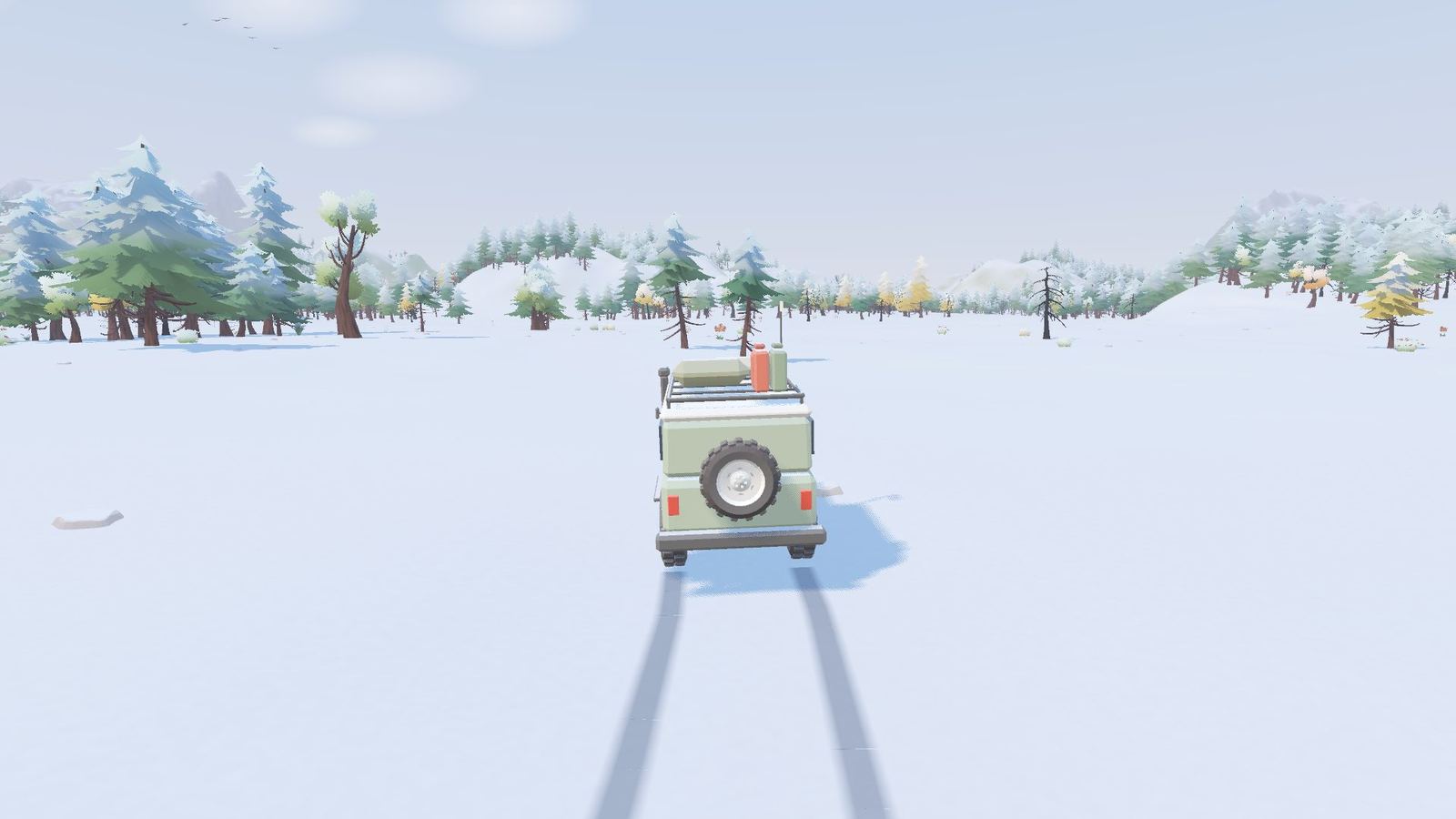
Hush Trail is a game about a truck, so the truck has to feel right before anything else does. This post goes through how the vehicles are built, from the first five trucks on the first night to the motorbikes that arrived on 13 November.
A truck with weight
Every truck is a Godot VehicleBody3D on the Jolt physics engine, with raycast suspension at each wheel. On top of that sits a small drivetrain: a torque curve feeds an automatic four-speed gearbox with a high and a low range. Low range trades speed for torque, for steep climbs, rocks, deep mud and snow.
Each surface grips differently: grass, dirt, sand, mud, rock, snow and water. Water slows the truck and throws spray, mud keeps your ruts, and dirt builds up on the paint the longer you drive. Drive into water that is too deep and the truck is rescued and put back on dry ground near where it went in.
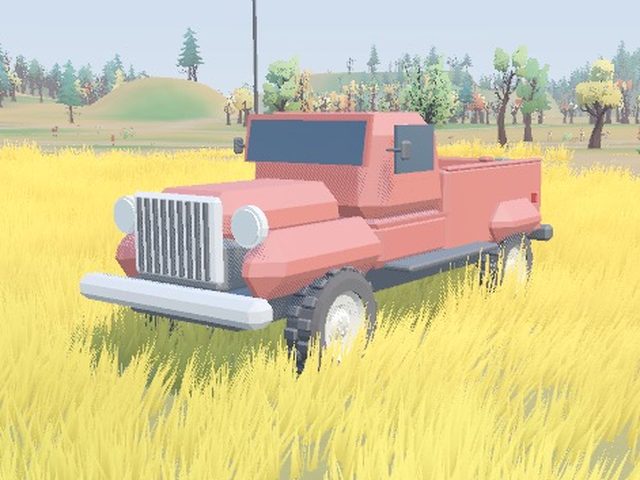
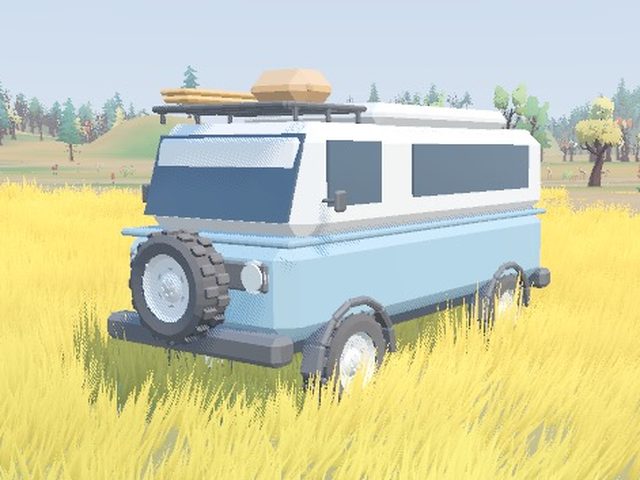
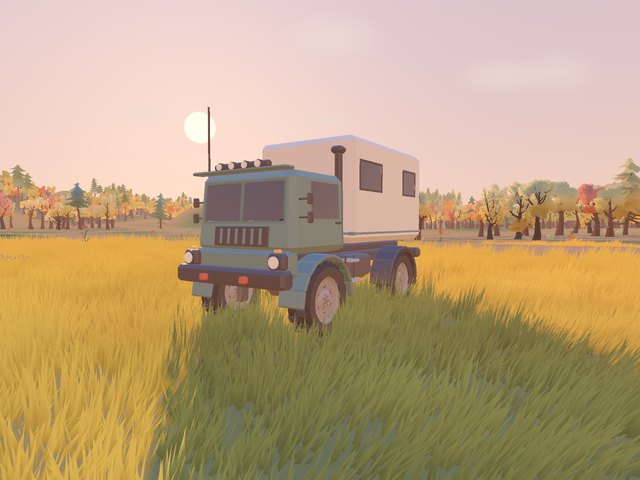
The first roster, on the first night, was five trucks built in code from chamfered parts: Mule, Ranger, Hauler, Nomad and Goat. The Wren, the Yak and the Tortoise motorhome came later, and there is a caravan to tow. None of them is a licensed model. The silhouettes recall 4x4s from the sixties to the eighties, and the names are made up.
The caravan and the views
Any truck can tow the caravan, which you switch on in its garage setup. It follows on its own hitch, sways a little and can fold up if you reverse too far, so back up slowly. There are three views: Chase, High and Cab. Since 14 November Cab sits just in front of the windscreen with the bonnet at the bottom of the screen; on a bike you see the bars and the tank. Hold the view button and the camera rises over the truck, so you can pick a line through the trees.
Rolling over, on purpose
Early tests at full lock rolled the Mule and the Nomad, so an anti-roll assist went in that kept body roll between 5 and 20 degrees. It worked too well: nothing could ever tip. On 12 November that changed. The assist now lets go past about 40 degrees, the low centre of mass rises and the springs on the low side fade as the truck leans, so a truck really can go over on a bad line. The Recover button puts it back on its wheels.
The winch
When low range and patience are not enough, the winch hooks the nearest tree or rock ahead and reels in while you hold the throttle, with a rope that sags until it takes the load. Since 11 November it can no longer haul a truck straight up a cliff, which was more fun than it should have been.
Quiet engines
From the first plan, Hush Trail has no engine roar. You hear wind that rises with your speed, the tyres on the ground and the radio. The vehicles do have soft engine sounds, made in code, but they start turned off; you can bring them up in Settings.
Aircraft
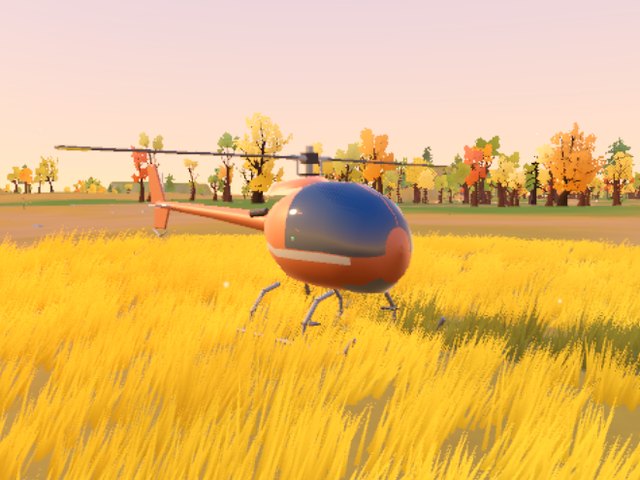
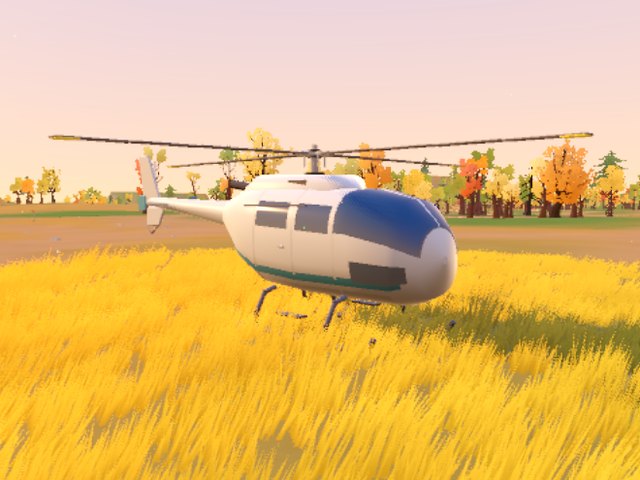
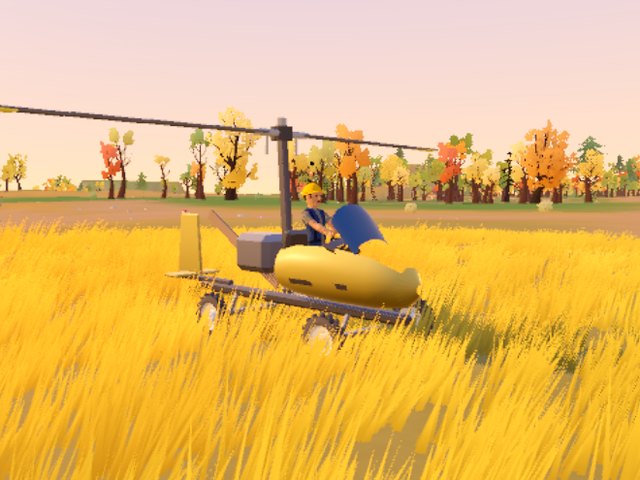
Version 1.2.0, on 7 November, added three aircraft to the Full Trail Pass: the Dragonfly, an open gyrocopter that takes off after a short run, and two helicopters, the Heron and the Pelican. They will not land on water: they hold four metres above it and tell you so. On slopes they set down upright. In the air their models stop casting shadows and the game draws one soft shadow on the ground where the sun puts it.
The first helicopters looked like toys. On 13 November they were rebuilt with smooth lofted bodies, thin tapered rotor blades with yellow tips, tube skids, navigation lights and an antenna.
Motorbikes
The first bikes arrived on 13 November: the Fox trail bike, the Hare for motocross and the Bison adventure tourer. The Jackal enduro, the Otter with a sidecar and the Lark scooter followed the next day.
A true two-wheel physics model would fall over the moment you let go of the phone. So under each bike there is an invisible, narrow four-wheel track with strong anti-roll, and what you see is drawn on top of it. The bike leans into a bend by the angle its speed and turn rate call for, up to about 34 degrees, the fork turns on its steering axis, and the rear wheel follows the suspension. In the air a bike floats a little and levels itself, on loose ground the rear slides, and a hard launch lifts the front.
The rider was the hardest part. The seated driver from the trucks is bent into a riding pose when the bike loads, with feet on the pegs, a helmet sized to the head, and gloves on two extra hand bones that hold the grips and turn with the bars. On the Otter your dog rides in the sidecar.
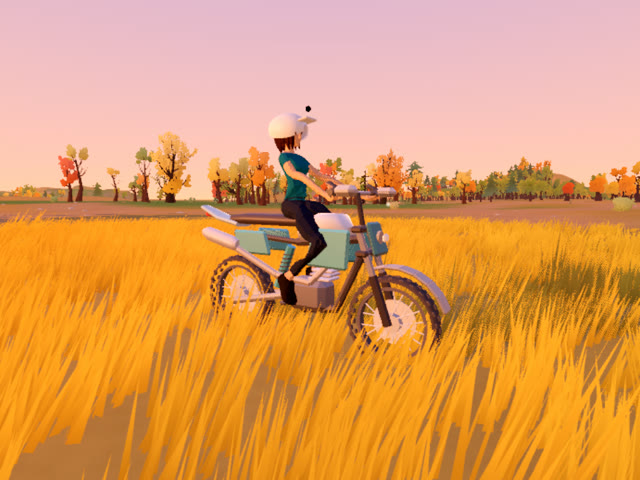
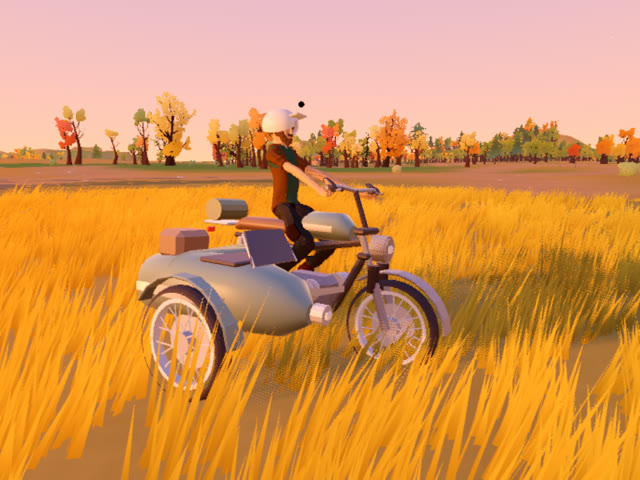
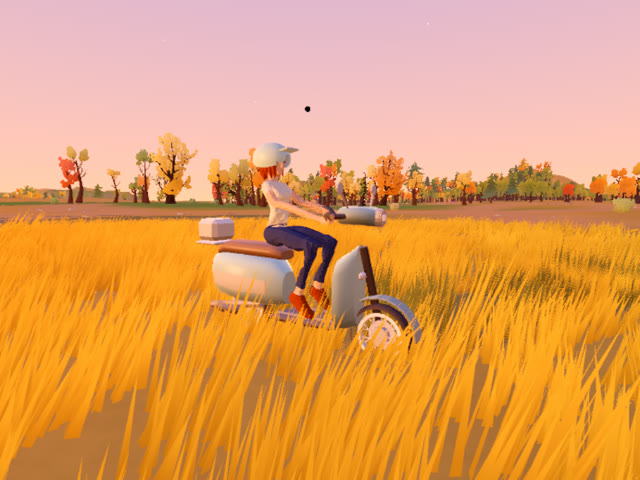
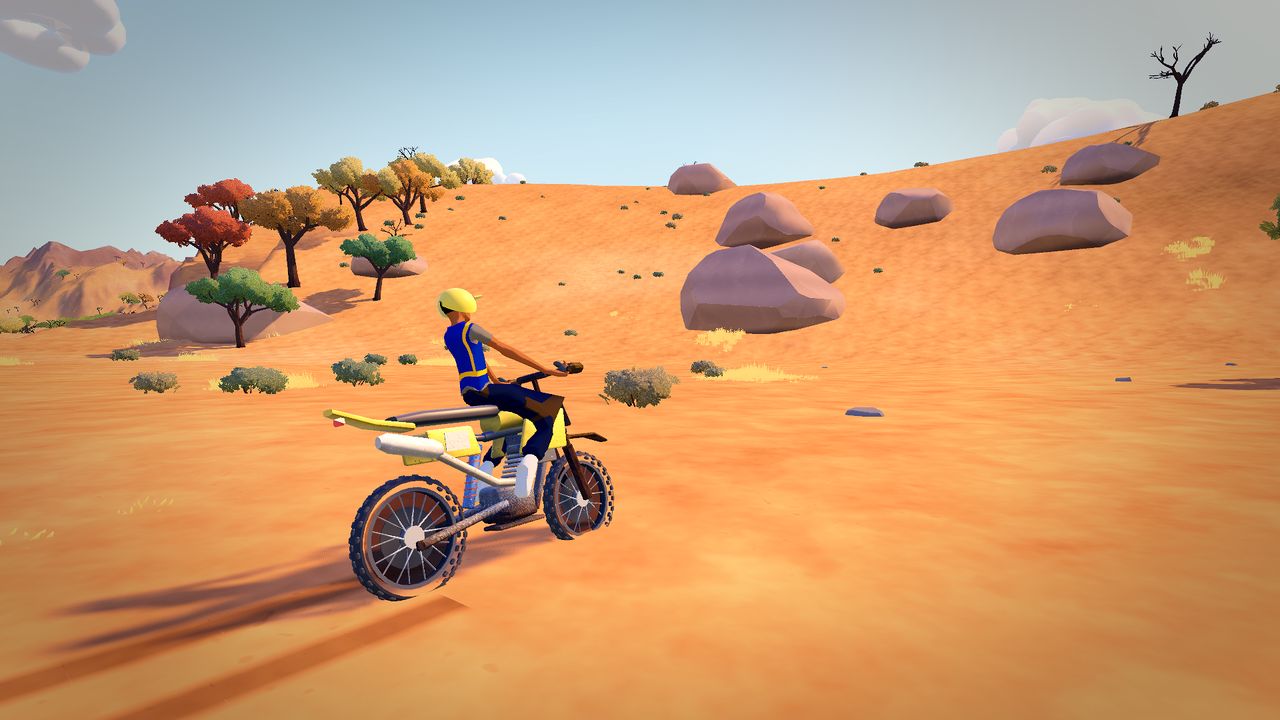
The newest touches came from players on 16 November: bodies now lean in corners, squat when you pull away and dip under braking. That movement is only for the eyes and does not change the physics.