 Hush Trail
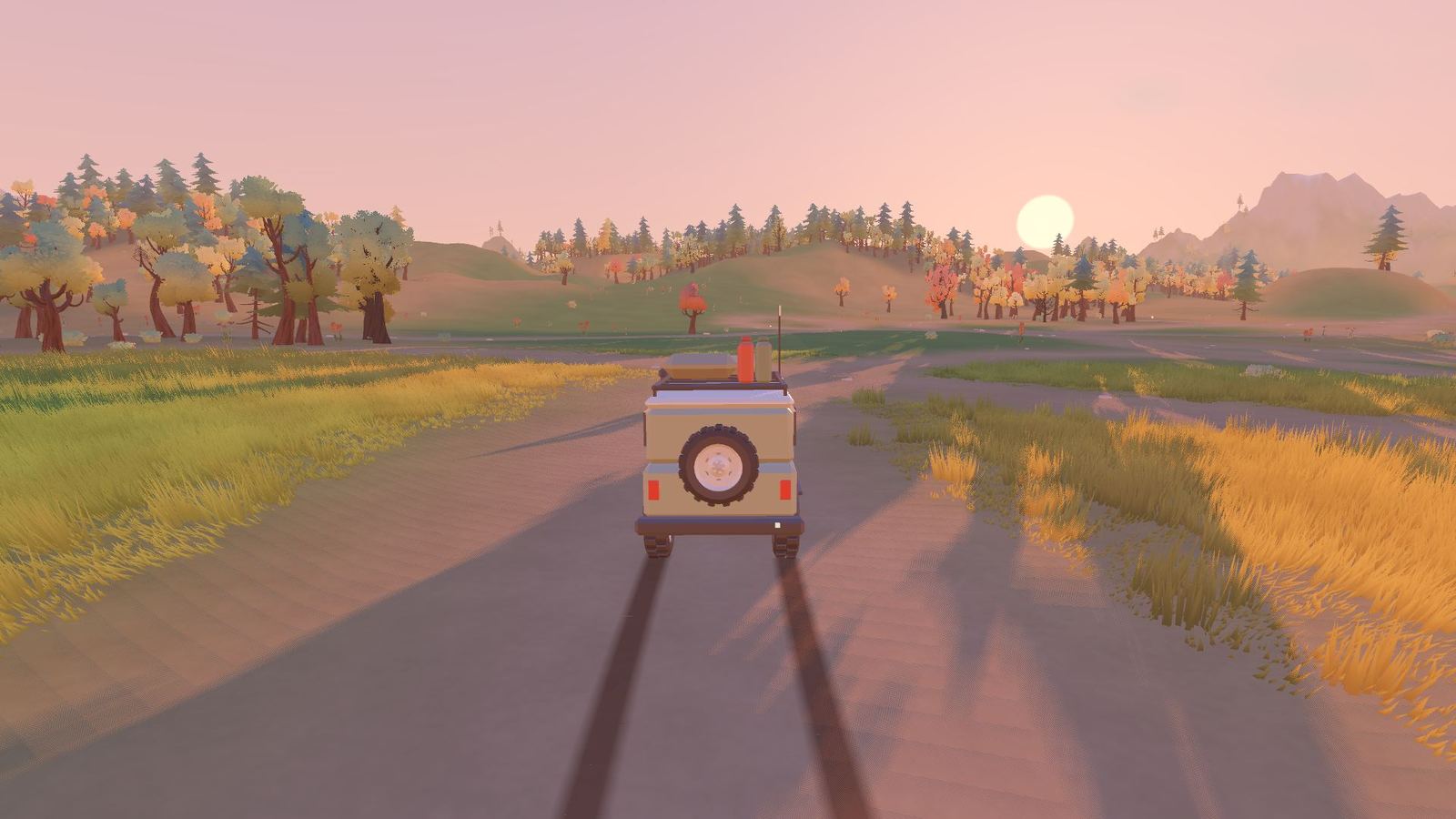
Hush Trail started on 28 October 2026 with a one-line brief: a quiet, aimless, stylised 4x4 wander for iPhone and Android. You open the app, you are in a truck, and there is a hill in front of you. That is the whole pitch.
I have spent more than twenty years designing digital products for other people. Most of what is on my phone wants something from me: a streak, a score, a notification, an ad view. I wanted one thing on it that asks for nothing. Something to open for two to ten minutes after a long day, drive somewhere, look at the light, and put down again.
The rules it keeps
The game is in the spirit of Over the Hill by Funselektor on Steam, which shows how good it feels to simply drive a heavy truck up a soft hillside. Hush Trail takes that feeling to a phone and to short sessions. From the first day a few rules were fixed, and they have not changed:
- No missions, no currency, no ads. Nothing to grind and nothing that runs out. The reward is the view at the top of the hill.
- In the truck within three seconds. No menu and no intro on launch. Close the app and it keeps your place.
- No engine roar. Wind that rises with your speed, a soft sound from the ground under the tyres, and a radio.
- Thumb-first. The left thumb steers, the right thumb drives. Everything has to work one thumb at a time.
- Physical honesty. The truck has weight, the suspension works where you can see it, and low range trades speed for torque. Getting stuck is a story, not a fail state.
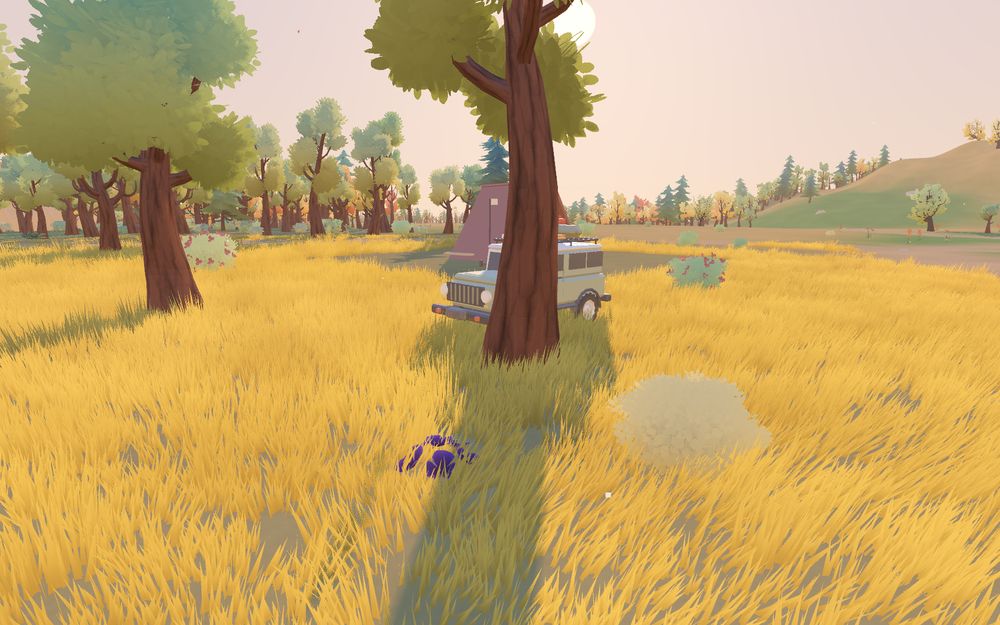
The business model was settled early as well. The game is free to start and has no ads. One purchase, the Full Trail Pass at US$3.99, opens the other places and vehicles for good. There is no subscription and nothing to top up.
Unity on paper, Godot in practice
The research plan suggested Unity 6. When I sat down to write code on the first day, I switched to Godot 4.7, for reasons that are fairly specific to how I work.
I build Hush Trail with an AI coding assistant, Claude, doing much of the typing. In Godot the whole project is plain text: scenes, scripts and project settings are all files the assistant can read and change directly. In Unity, scenes, prefabs and the links between them live in the editor and in asset IDs, and editing them from outside is fragile.
The second reason is one code base. iOS and Android get the same build of the same project, exported twice. My film camera app ReeLight needed a one-to-one port to Kotlin for Android. A driving game with vehicle physics and online convoys could never stay in step across two native code bases.
The third is that the parts were already there. Since Godot 4.6, Jolt is the default physics engine, and VehicleBody3D comes with a raycast suspension model ready to use. Neither engine was installed on my Mac, and Godot was one Homebrew command away, with no account, no splash screen and an MIT licence.
The risk I wrote down that day was 3D performance on mid-range Android phones. The plan was the mobile renderer, low-poly shapes and fog, and a checkpoint at the end of phase zero to measure it on a real phone.
Phase zero
The plan has six phases, from a physics prototype to a soft launch. Phase zero was a grey-box world, one truck, touch controls, wind, a chase camera and autosave, with a single question as its gate: does driving for five minutes on a phone feel good?
The first day was mostly about learning the engine’s habits. VehicleBody3D drives along +Z, so the front of the truck faces +Z, and steering right while facing +Z means turning towards -X. Jolt does not accept a sphere shape with uneven scale. A new class name needs an import pass before a scene can use it. Small things, but each one cost an hour the first time.
That night the work ran as a loop: pick the next item, build it, render a frame, compare it with the reference pictures, commit, write it in the log. By morning there were five trucks, a world with weather and a time of day, landmarks to find, a winch, a generative radio and a signed iOS build waiting for my phone to be unlocked.
Nine days later, on 6 November, Hush Trail was on the App Store. The next posts tell how the parts came together: the world, the vehicles, the places, camp and friends, and the changes players asked for.