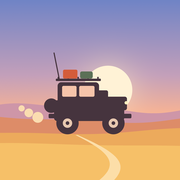
 Hush Trail
On 14 November I started an experiment on a separate branch: could Hush Trail look hand-painted instead of procedural? It was not meant to ship. The deal was simple: if it convinced me, it would become 2.0. By 16 November it had, and version 2.0.0 is now being tested on TestFlight and in the Android closed test.
One page of rules
Before any model there was a one-page art direction, and every asset is checked against it. Its five rules:
- The ground is calm, the things on it are painted.
- Light or shade, with a soft edge: two tones, decided by the shape of the thing.
- Shadows go blue, never grey.
- Hand-built, a little crooked. Nothing man-made is perfectly straight, except the trucks.
- Most of the picture is muted so a few things can glow.
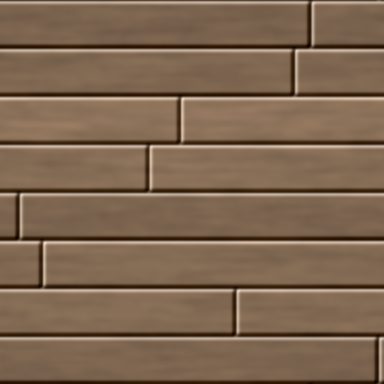
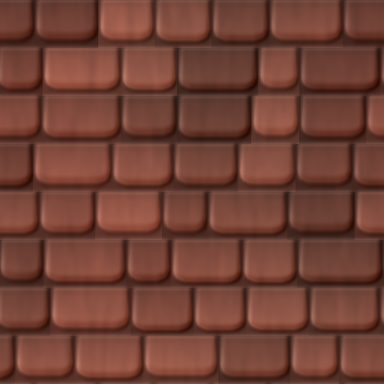
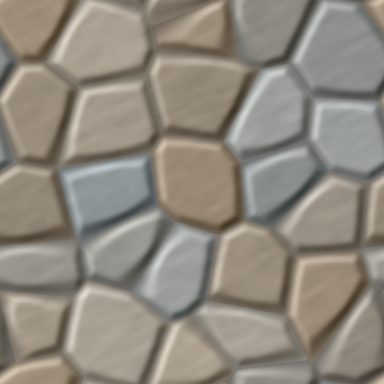
The textures are painted in code, 512 pixels each, tiling, with flat light so the game can add its own. No image models are involved. Buildings are made by Blender scripts, and their materials are named for what they are, such as stone, roof, planks, trim and window, so the game picks the right shader by name. At dusk the windows light up one by one.
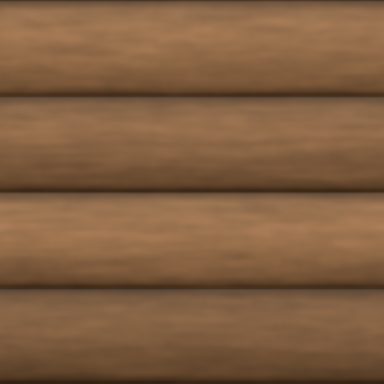
Not enough difference
The first pass changed the light and the materials. When I looked at it, I could not see enough of a difference. So the second pass went further: the trucks and the nature would really be rebuilt in Blender.
The Mule was modelled by hand, in a script: cut fender openings with rubber lips, grooves and door lines cut into the body, hinges and handles, deep headlight bowls, a tube roof basket, real jerry cans and bags, axles, a differential, springs and shock absorbers. The other trucks are rebuilt from the list of parts the game already made them from. The game exports that list, and Blender turns it into rounded panels, wheel arches cut out of the body, real grooves where there were painted stripes, and a rubber seal around every window. The bikes, the aircraft and the sleigh followed. Every truck got new wheels with mud-terrain blocks, a flanged rim, six wheel nuts and a valve.
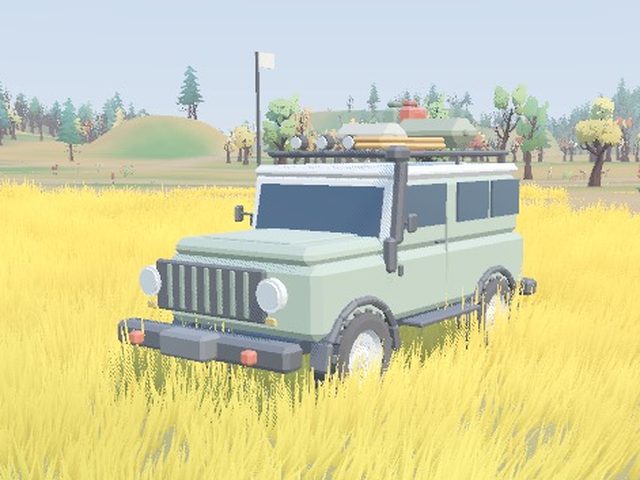
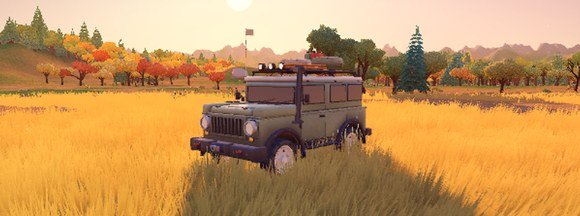
The trees, shrubs, flowers and rocks were regrown by a script under the same names as the kit models they replace, so the game picks them up without other changes. Leaves carry their own normals and a baked shade. The flat cards that stand in for faraway trees were baked again from the new trees.
Sky and water
Clouds are now real cumulus shapes made of soft blobs, 26 of them in the sky, lit by their own shader. Every lake and pond reflects its banks through a reflection probe that renders once. The water got soft painted streaks, a thin layer of glints, light patterns in the shallows, wave lines that roll in to the shore, fine foam, and a darker band of wet ground along the edge.
Everything else
The camp kit, the old bus, the bridge, the ruins, the standing stones and the radio mast were all rebuilt from Blender parts: timbers cut to length, rough stones, dressed blocks. The deer got proper anatomy, the ducks and herons new bodies, the dog and the cat combed fur. Snow stopped being paper white and now drifts in two tones, with blue in the hollows. The whole colour grade became gentler after the whites started to clip.
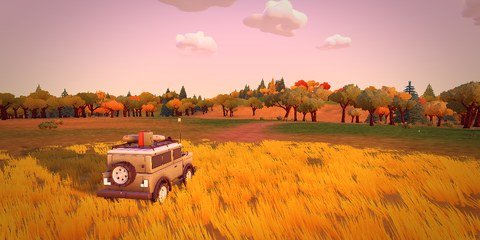
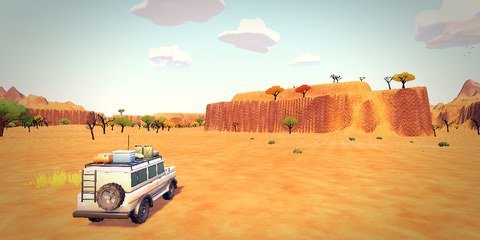
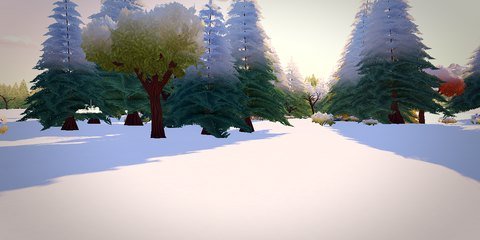
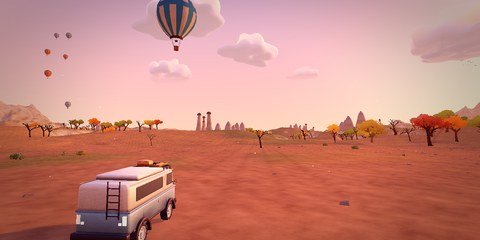
One switch in the code turns the whole look off, so the old and the new can always be compared side by side.
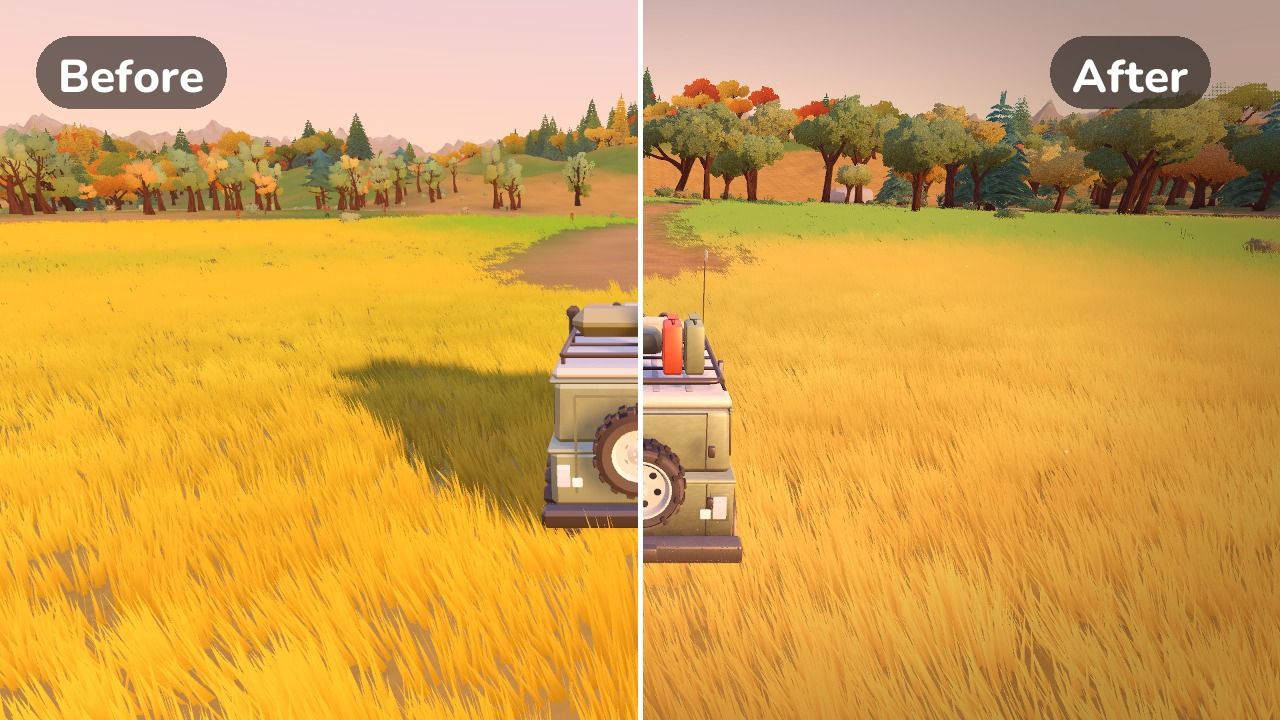
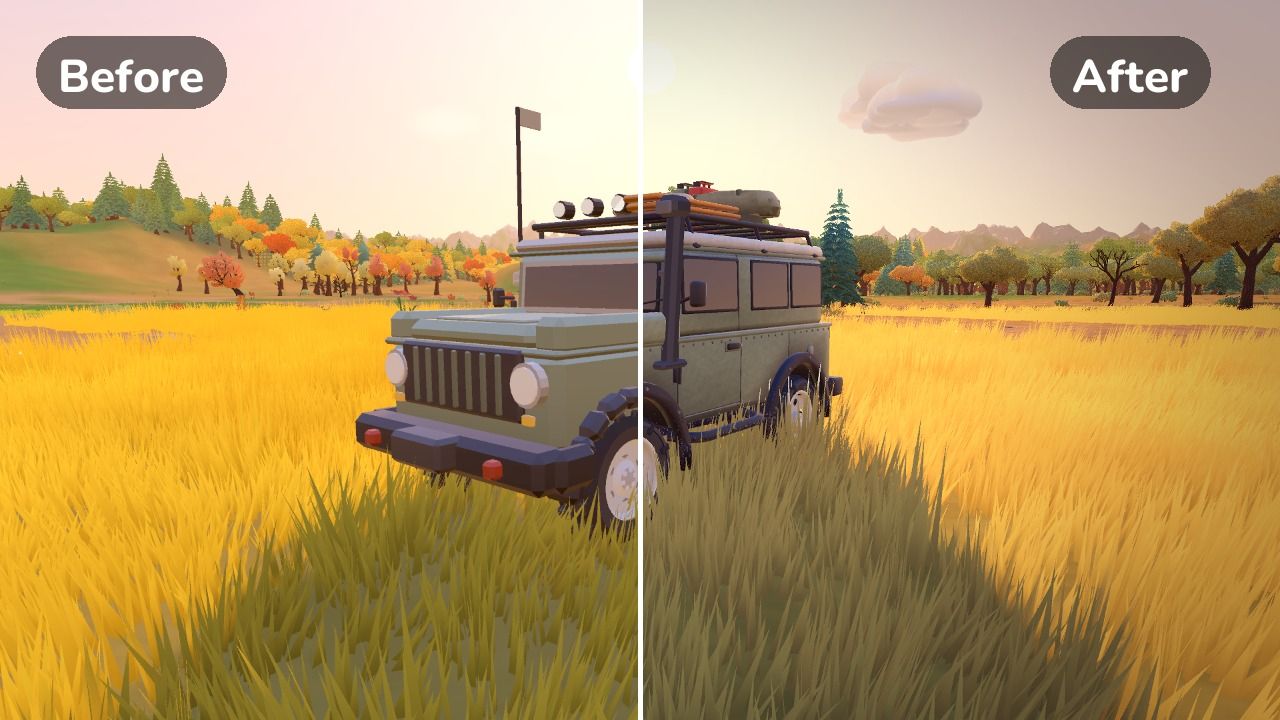
Checking it
Every change went first to a staging copy of the web version and to a separate test app on my Mac, never straight to the stores. A test build with its own identity went to my iPhone to measure the frame rate. When something looked wrong, it was usually because of the chase camera: things are seen from six to twelve metres away, so walls, doors, roofs and tree trunks carry the detail, and the far landscape stays simple.
Pick how it looks
A richer picture costs more, and phones differ a lot. So 2.0 asks one question on first launch: how should it look? The card shows the same moment drawn three ways, Battery, Balanced and Beautiful, with Balanced selected. One tap on Continue and you are driving, and you can change it later in Settings. It is the one exception to the rule that you are in the truck within three seconds.
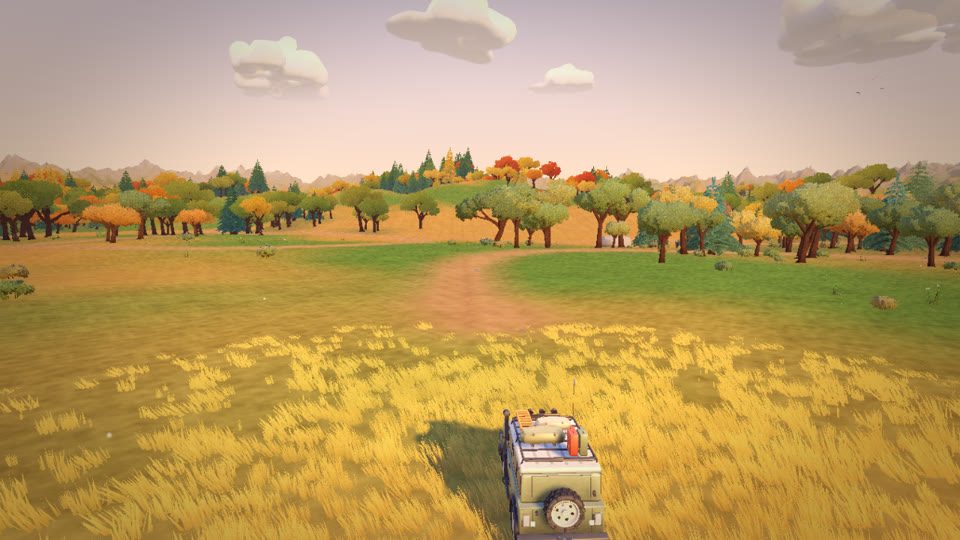
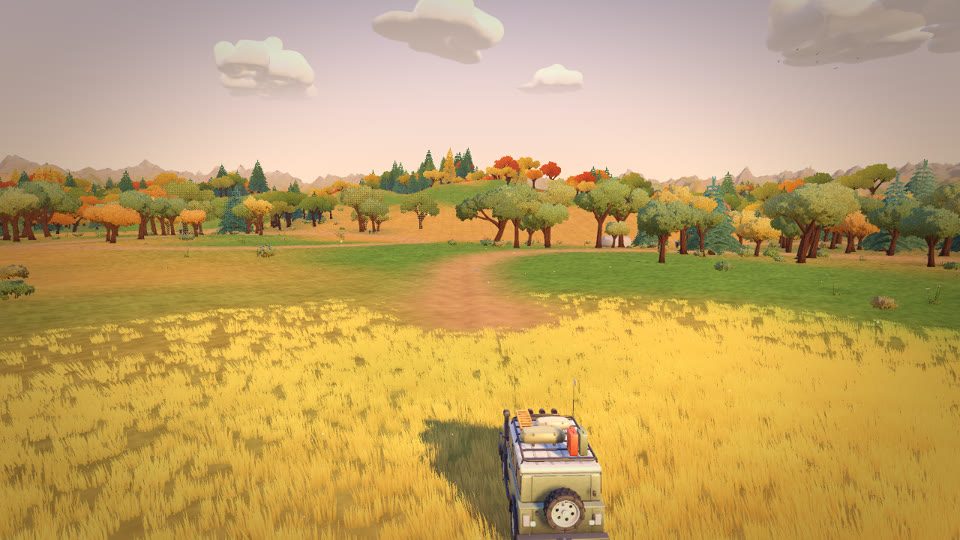
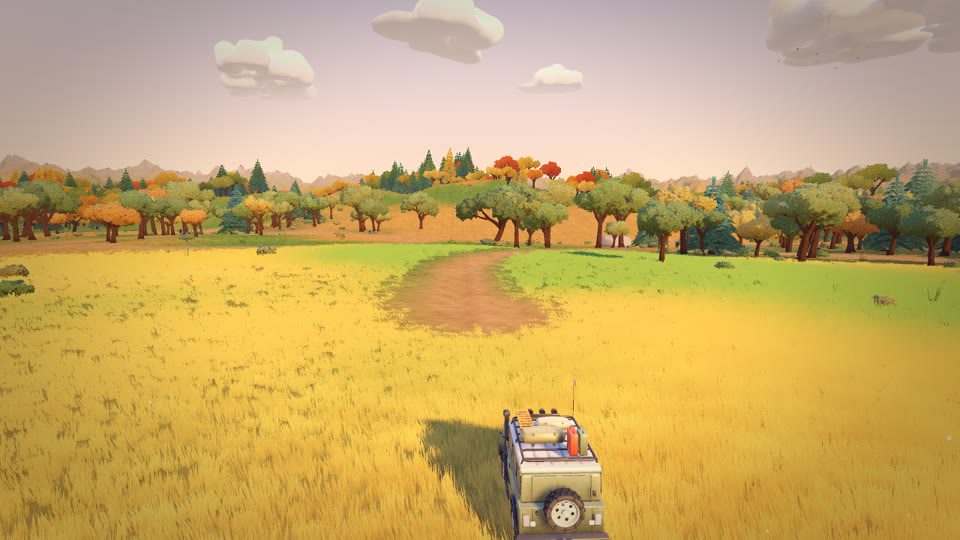
All the Blender models together come to about 40 MB before compression, and the app still has to stay small enough to download over a mobile connection. That, and frame rates on phones, have a post of their own.